
Marketers say that every company should have its own "unique selling proposition." We have one - it is the ball-worm differential.
What is ball-worm differential
This is a special type of self-locking differentials. This differential is designed to work in the transmission of various vehicles. Although it was developed for off-road use, this type of differential also works well on asphalt, providing excellent torque transmission to all wheels.
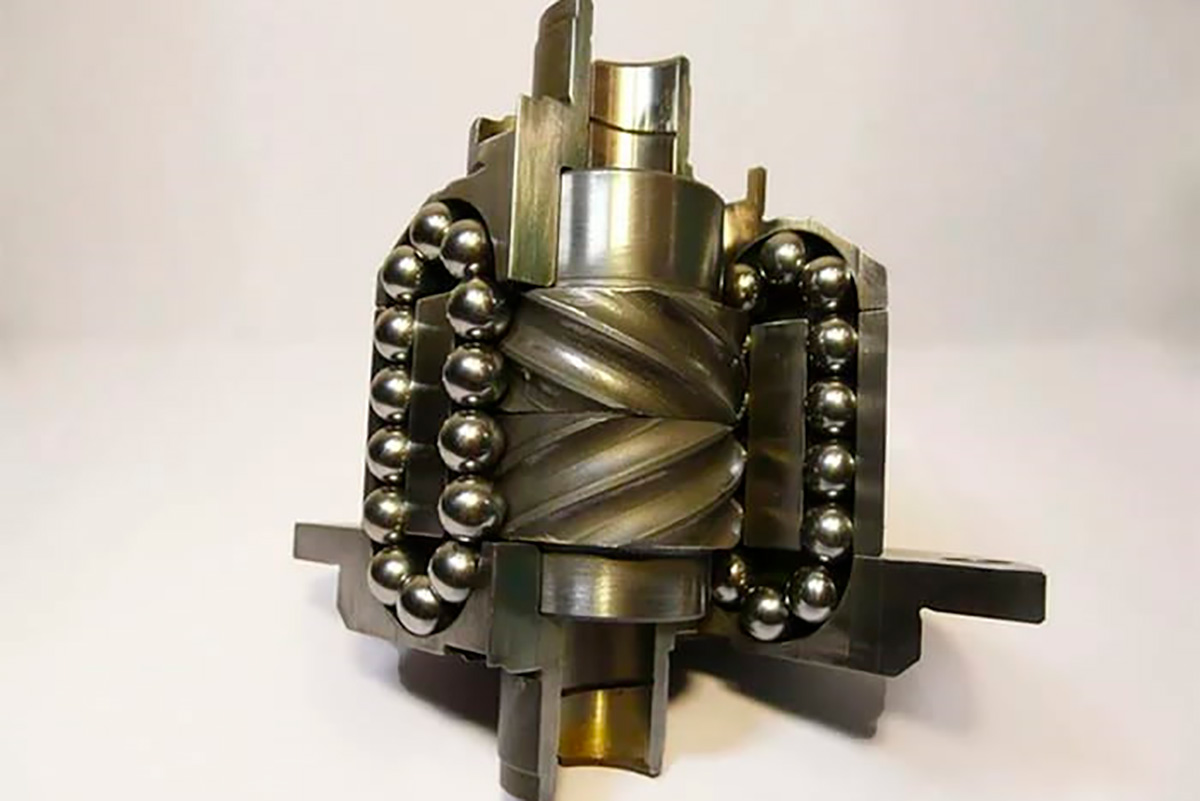
Ball-bearing self-locking differential
A ball-worm differential is a steel case with the same mounting dimensions as your car's original differential. The differential's driven gear is attached to the case - the transmission's torque is transmitted to it. Inside the case, there are two worms with oppositely directed grooves - the axle shafts of your car's semiaxles are inserted into them. The case also contains chains of high-strength balls. These chains pass through special channels in the case and the grooves of the axle shaft worms.
How does it working
When the vehicle is moving straight ahead and the road surface is the same under the wheels, the force on the axle shafts is almost the same. The chains of balls are at rest. This ensures an even distribution of torque between the wheels. When the vehicle is turning, the balls move freely in their channels, continuing to distribute torque between the wheels and not creating resistance to movement. In this mode, the operation of the ball-worm differential is similar to the operation of a classic differential.
Another situation. One wheel is in liquid mud and tends to slip. Or you press the gas pedal sharply, and one of the wheels starts to slip. In this case, the balance of torque between the wheels is disrupted. The balls begin to move, transmitting maximum torque to the most loaded wheel. The differential is locking.
You released the gas pedal and the engine stopped producing excess power. Or both wheels were in the same conditions. In either case, the balance of forces between the wheels will be restored, the differential will unlock.
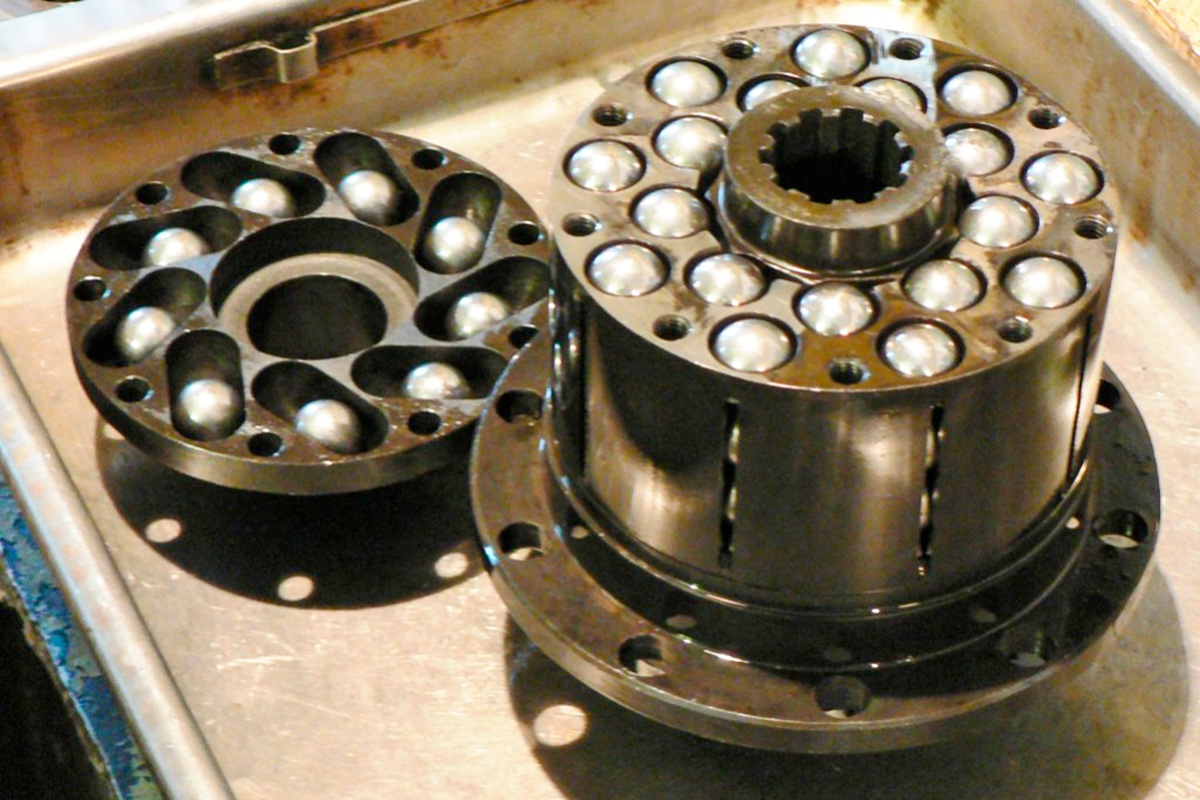
Cross channels for the movement of balls. They are responsible for the redistribution of torque between the axle shafts and the differential lock.
Why is this necessary?
On the off-road, the ball-worm differential does not require activation or deactivation. It automatically locks or unlocks the transmission exactly when needed – and does so reliably. It does not matter where you find yourself – in the mud, or on huge boulders. This differential will significantly increase the off-road capabilities of your car – and it will do so completely automatically.
On asphalt, this type of differential reacts almost instantly to a sharp increase in engine power, blocks the wheel that is starting to slip, and allows the torque to be realized as efficiently as possible.
Advantages of ball-worm differentials.
Uniqueness. Our own development, which really has no analogues.
No resistance in unlocked mode. When the differential is not locked, it is completely similar to a classic differential and does not create resistance to the vehicle's movement.
Fully automatic operation. There is no need to engage or disengage the lock. The differential automatically locks and unlocks when it needed.
Quick response to changing road conditions. The differential locks as soon as a torque difference occurs between the axle shafts.
Versatility. The optimal solution for offroad vehicles and sports cars. The ball-worm differential works great both off-road and on asphalt.
Easy installation. The differential is supplied assembled and is installed in the standard vehicle axle. No modifications to the axle or installation of control lines are required.