
The differential gear is an important component that applies torque the vehicle’s drive wheels. A vehicle differential is different from the transmission. It is a part of the axle assembly and connects to the transmission through the driveshaft. It is the system that allows your vehicle’s wheels to turn at different speeds.
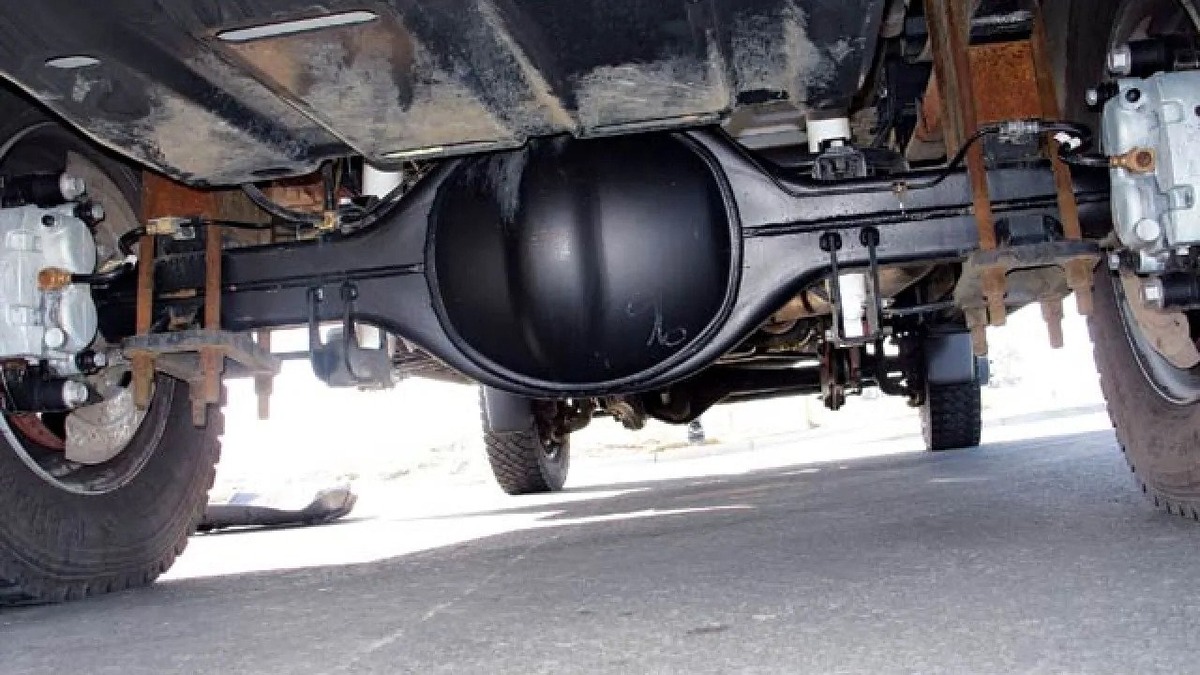
Rear axle and ifferential case. Inage from GoMechanic.
Why a car needs a differential?
When the car is moving straight, both wheels of the same axle travel the same distance and rotate at the same speed. There is no need for the differential to work, and it transfers torque from the transmission to the wheels evenly. As a vehicle turns, the inside wheels travel a shorter distance than the ones on the outside. The fundamental problem a differential aims to solve is allowing the outside wheels to spin faster than the ones on the inside, and prevent them from being dragged along to keep up.
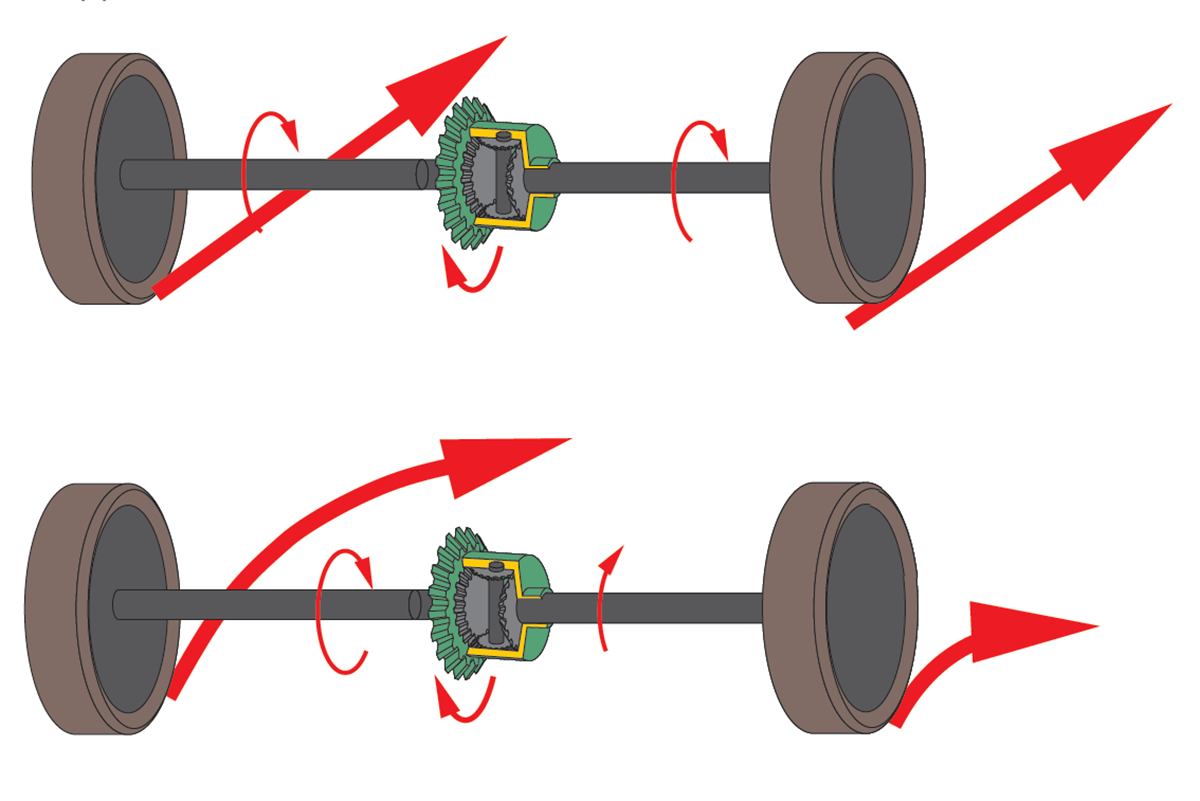
This illustration clearly shows in which cases the differential works and how it happens.
How does a car differential work?
The differential consists of a series of gears connecting a car’s driveshaft (the shaft that transfers power from the engine) to a split axle. Apart from varying the speed of the wheels, the differential also works to split torque between them. The pinion gear drives the ring gear, which then causes the carrier to rotate. As the carrier rotates the smaller (or “spider”) gears will begin to drive the side gears. This is what will then cause the vehicle’s wheels to go.
This educational film was released in 1937 - but since then the design of the differential and the principle of its operation have not changed
What types of differentials are there?
There are many ways to classify differential types. We prefer to divide differentials into 4 basic types with several subtypes:
- Open differential
- Locking differential
- Automatic locking differentials
- Selectable locking differentials
- Pneumatic
- Electric
- Hydraulic
- Cable-operated
- Spools
- Limited-slip differential
- Torque-vectoring differential
Open differential
Most vehicles are equipped with an open differential from the factory. A differential in its most basic form comprises two halves of an axle with a gear on each end, connected together by a third gear making up three sides of a square. This is usually supplemented by a fourth gear for added strength, completing the square. This basic unit is then further augmented by a ring gear being added to the differential case that holds the basic core gears – and this ring gear allows the wheels to be powered by connecting to the drive shaft via a pinion.
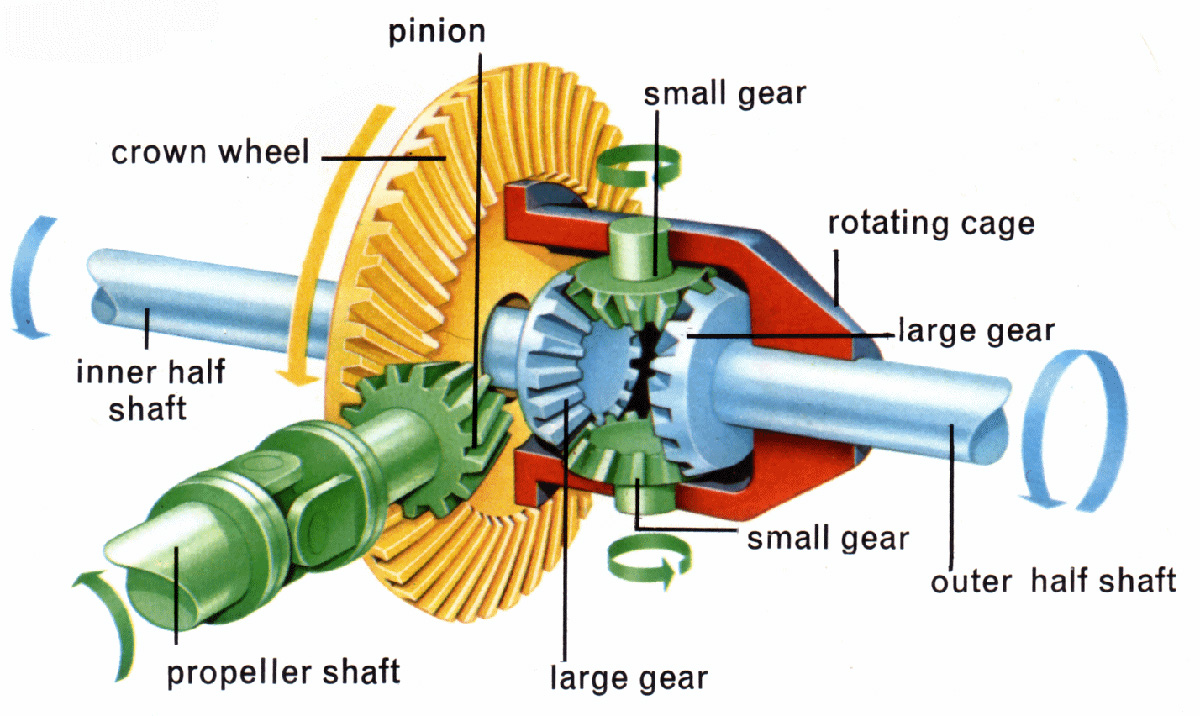
Open differential construction. Illustration from CarExpert.
This type of differential is perfect on dry pavement, as it allows the axles turn at different speeds when cornering. However, an open differential is less than ideal when one or both tires lose traction. In these situations, the tire with no traction spins, and the tire with traction does nothing.
Locking differential
Also known as a welded differential, this connects the wheels, so they go at the same speed. The benefit of a locked differential is it is able to gain a considerably greater amount of traction than an open differential. Because the torque is not equally split 50/50 it can channel more torque to the wheel that has the better traction - and is not limited by the lower traction of the other wheel at any given moment. Most full-sized trucks, offroad vehicles and some sportcars have this type of differential. There are three types of locking differentials.
Automatic locking differential
Automatic lockers, or self-locking differential, lock and unlock automatically with no direct input from the driver. Some automatic locking differential designs ensure that engine power is always transmitted to both wheels, regardless of traction conditions, and will "unlock" only when one wheel is needed to spin faster than the other during cornering.
There are several schemes of automatic locks. One of the author's developments - a ball-worm differential - is exclusively presented on our website.
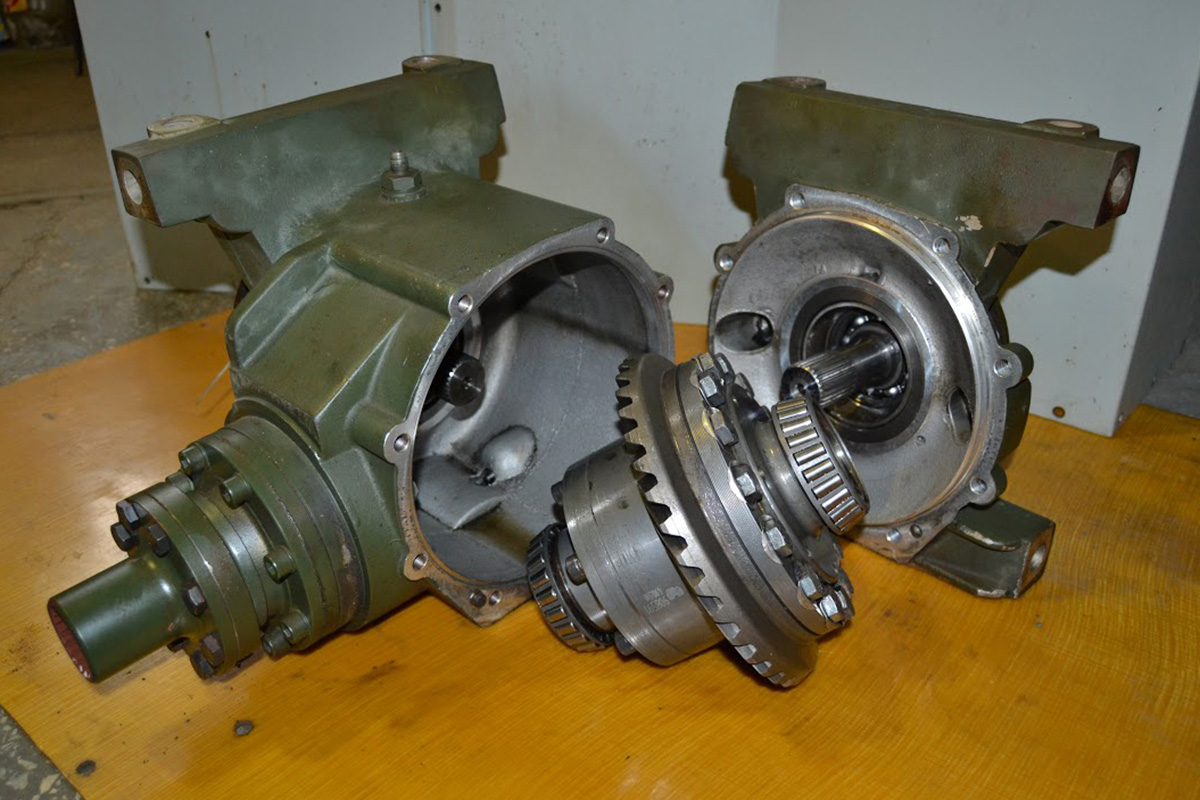
Self-locking differential for Hagglunds Bv206. Illustration from bv206.dm-atv.com.
Selectable locking differential
Selectable lockers allow the driver to lock and unlock the differential at will from the driver's seat. The advantage of this type of locking is the driver's full control of the differential operation. There are several types of selebrate locking differentials.
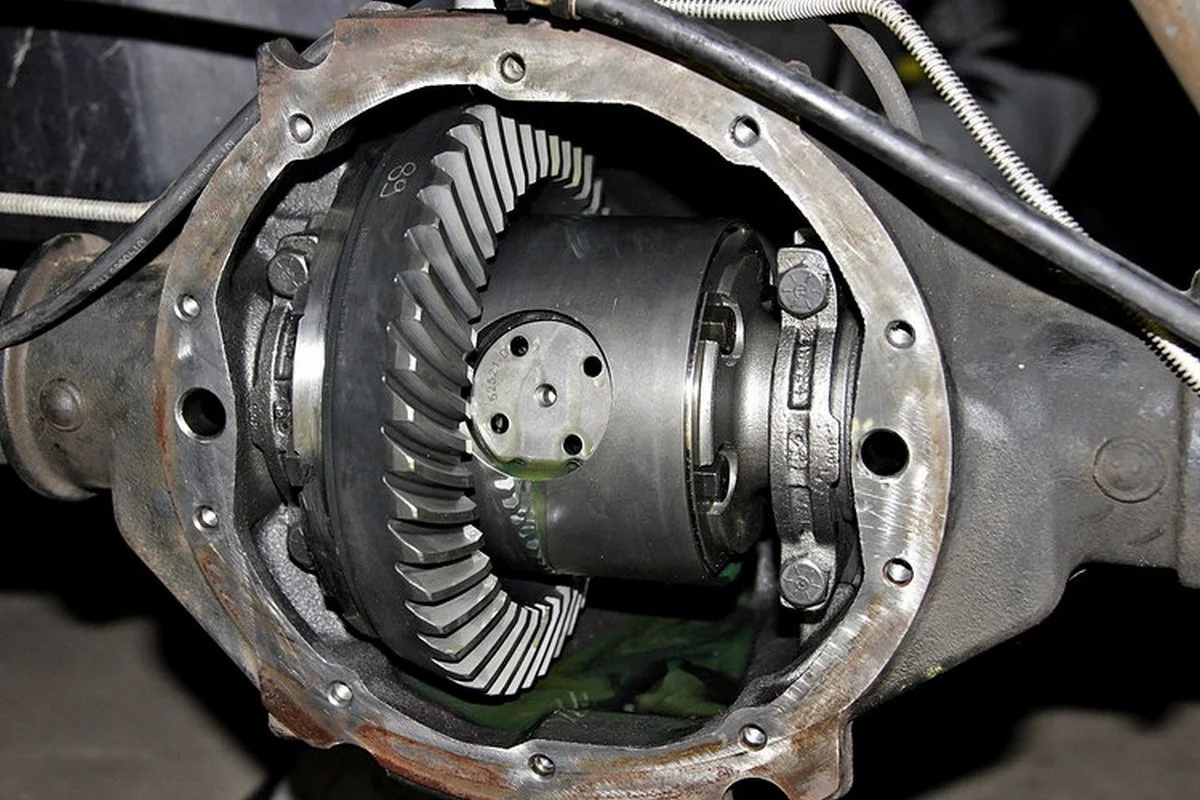
Illustration from Street Muscle magazine.
Pneumatic
The lock is turned on and off with compressed air. To turn it on, a compressor is needed in the system, a silicone tube for air supply goes to the differential.
Electric
The differential lock is activated electrically - by a servo drive or solenoid.
Hydraulic
Differential control via hydraulic drive.
Cable-operated
Mechanical drive for engaging and disengaging the differential lock.
Spools
It is a device that connects the two axles directly to the ring gear. There is no differentiation side to side, so a vehicle equipped with a spool will bark tires in turns and may become unmanageable in wet or snowy weather. Spools are usually reserved for competition vehicles not driven on the street.
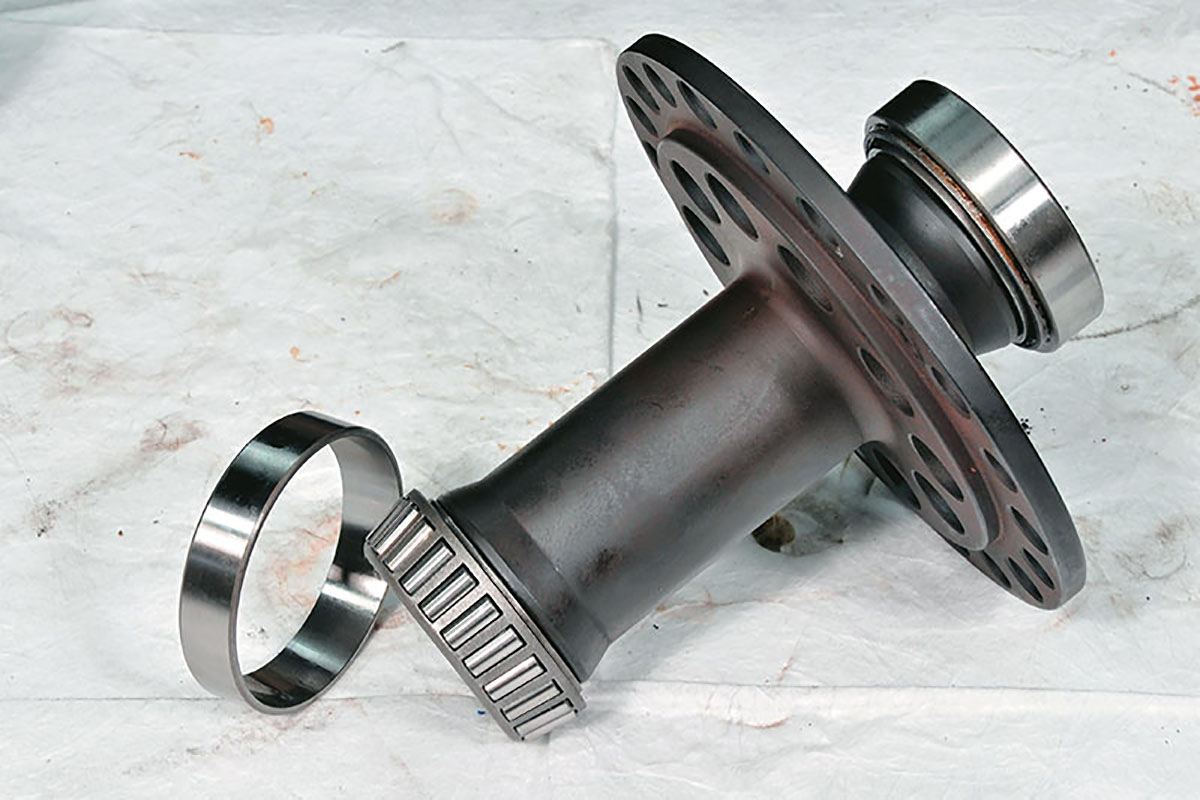
Diff spool. Illustration from UniqueCars.
Limited-slip differential
Found in sports cars, the limited-slip differential acts like an open differential by default. Once a wheel loses traction, then it shifts to act as a locking differential so there is more traction and control on the road. A limited-slip differential (LSD) is a type of differential that allows its two output shafts to rotate at different speeds but limits the maximum difference between the two shafts.
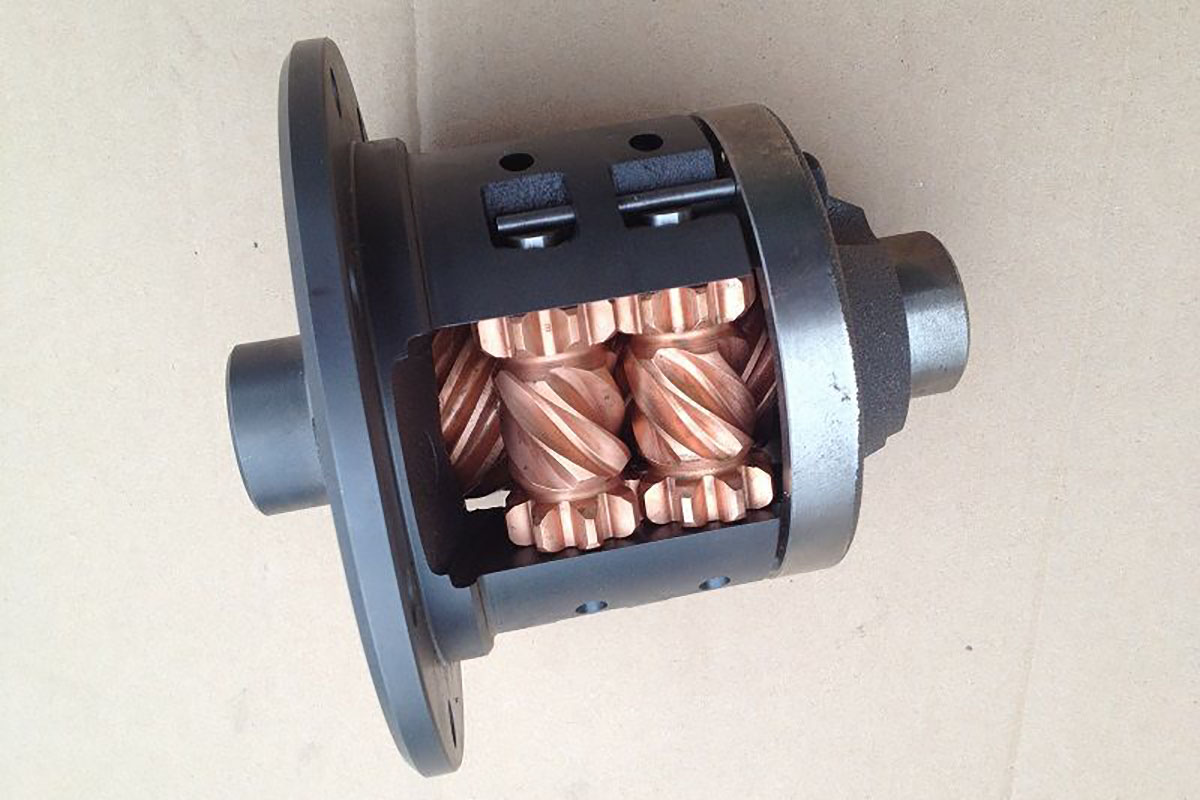
One of the types of limited-slip differential is Torsen. So, it is a registered trademark. Illustration from Globeworks.
Torque-vectoring differential
With added gear trains, the torque-vectoring differential can fine-tune the amount of torque delivered to each wheel. Torque vectoring is a technology employed in automobile differentials that can vary the torque to each half-shaft with an electronic system. This method of power transfer has recently become popular in all-wheel drive vehicles. Some newer front-wheel drive vehicles also have a basic torque vectoring differential. As technology in the automotive industry improves, more vehicles are equipped with torque vectoring differentials. This allows for the wheels to grip the road for better launch and handling.